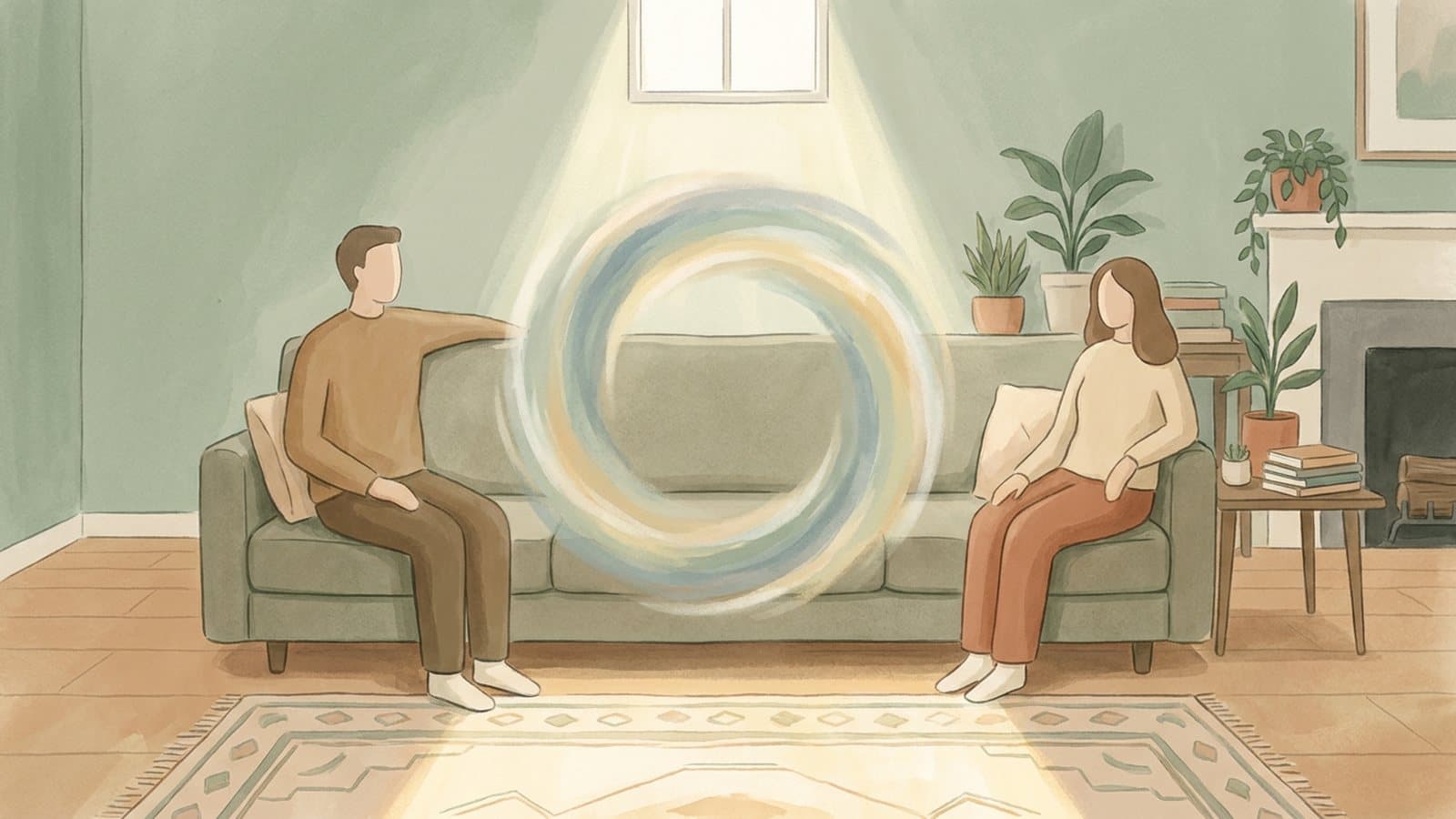
The dishes, a slow reply to a message, whose parents to visit this weekend. The topic changes every time, but the ending looks the same: one of you gets louder, the other goes quieter, someone leaves the room, someone picks up their phone, and both of you are left thinking, "You just don't get me."
If that picture is familiar, you don't have to start by working out who is right. Often what keeps you stuck is not the issue itself but a pattern that keeps repeating between you: an interaction cycle.
Why it is always the same fight
Emotionally Focused Therapy (EFT) is a couples therapy approach developed by Sue Johnson and Leslie Greenberg, and it is an empirically supported approach for couple relationship distress. One of its most useful ideas is that distress in a relationship often comes from rigid, negative interaction patterns, patterns that keep partners from meeting each other's needs for connection and security.
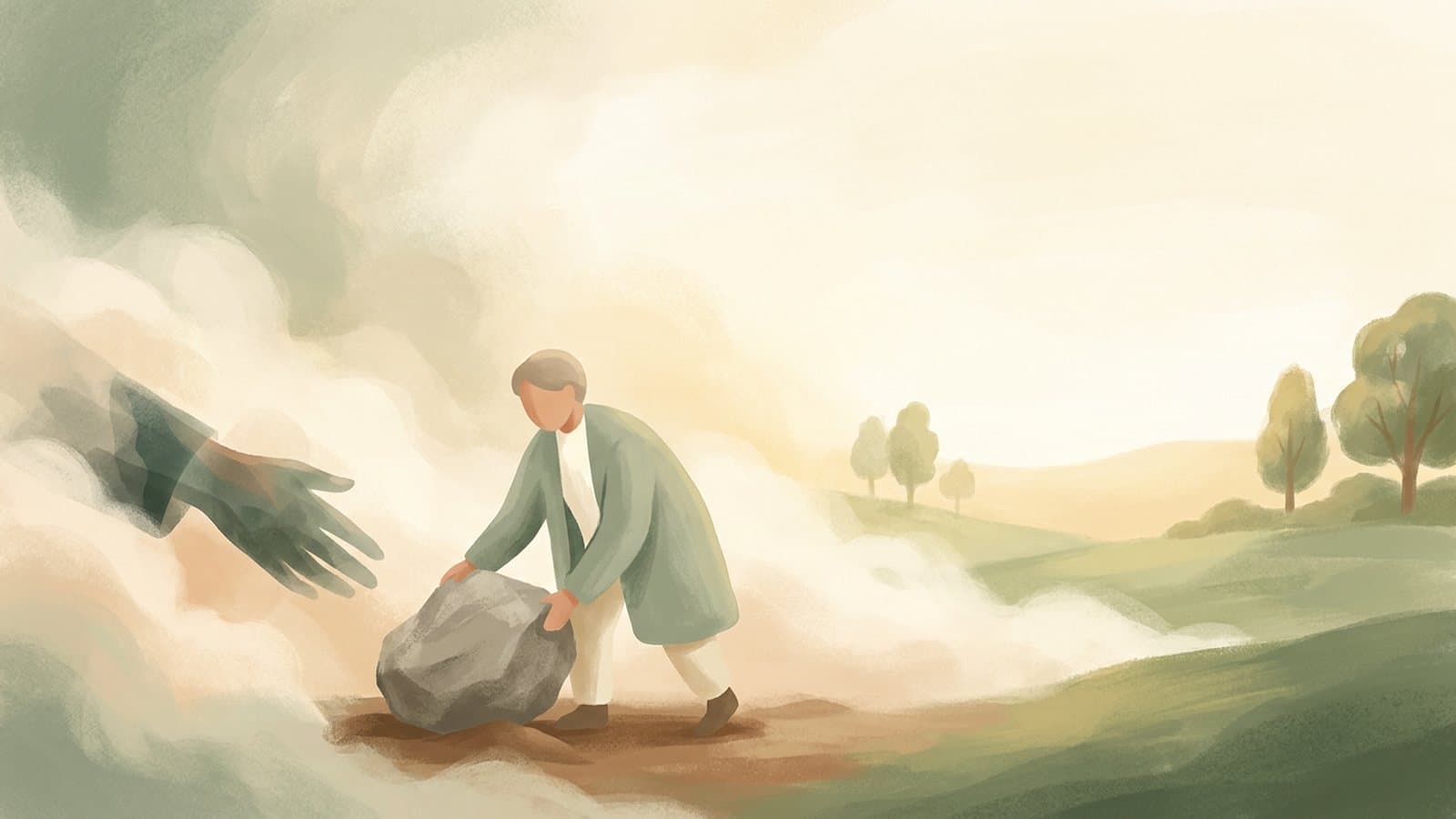
So early in EFT, couples are helped to reframe the problem as the cycle itself, not as "you are the problem". When two people stop treating each other as the enemy and start facing the cycle together, the conversation begins to change.
Esther Perel, who has worked with couples for decades, makes a similar point: conflicts are rarely only about the surface topic. Underneath are deeper questions: who gets to decide, do I matter to you, am I respected. The fight may be about the rubbish, but the question underneath is often "Do you keep me in mind?"
In other words, the same fight keeps returning because the surface issue gets settled while the thing underneath still hasn't been heard.
A common cycle: pursue and withdraw
One of the most common cycles is pursue and withdraw.
The pursuing partner senses distance or coolness and tightens inside: "Do you not care anymore?" So they press, raise their voice, bring up old grievances, trying to pull the other person back.
The withdrawing partner senses pressure or criticism and thinks: "If we keep going, it will only get worse." So they go silent, argue logic, or walk away, trying to cool things down.
Psychiatrist Tracey Marks describes this push-pull dynamic: one partner's withdrawal confirms the other's fear of being left, and the more that partner pursues, the more the withdrawing one feels that closeness is suffocating. Each is protecting the relationship in their own way, and each lands right on the other's sore spot.
Marks also points out that how we react in an argument is mostly not a chosen "communication style". The brain reads a face or a tone as a threat very quickly, the body shifts into fight, flight, freeze or fawn, and the part of the brain that handles perspective-taking and nuance works less well. That helps explain why we say things we later regret. It is an explanation, though, not an excuse for hurting someone.
Start by noticing your own position: in a fight, are you more often the one who pursues or the one who withdraws? Neither is better. Seeing your position is where loosening the cycle begins. For more on where push-pull patterns can come from, see attachment styles.
The needs under the cycle
Pursuing and withdrawing are what shows on the surface. Underneath there are usually softer feelings. For the pursuer it is often "I'm afraid of losing you" or "I feel alone". For the withdrawer it is often "I'm afraid of letting you down again" or "Nothing I do is ever enough".
Tracey Marks suggests asking yourself, during or after a flare-up: What did my brain decide was at stake? Common answers are respect, safety, being left, control, or being understood.
Once you have an answer, try translating the accusation into your own experience:
- "You never help!" becomes "When I saw the dishes still in the sink, I felt alone, like I'm the only one holding things together."
- "You always do this, you never listen!" becomes "I'm scared we'll end up fighting again, so I just want to stop for a moment."
This won't settle who does the dishes, and Marks notes that showing a vulnerable side needs a basic sense of safety in the relationship. But it lets your partner hear "I need you" rather than "you are awful", which gives them a better chance of lowering their guard.
What to try next time
These are practices the two of you can try together. Agree on them at a calm moment, not in the middle of a fight.
1. Notice your body first
Marks suggests watching your body during a disagreement: a racing heart, tense muscles, tunnel vision on your partner's faults. These are signs that you are flooded, and at that point more reasoning rarely gets through. She draws on John Gottman's research on physiological flooding to make this point.
2. Agree on a pause with a return time
A pause is not running away; it is giving your body time to settle. Marks suggests taking at least twenty minutes. Therapist Terry Real suggests giving a clear reason and a definite time to return, for example twenty to forty minutes. The key points:
- Speak from "I": "I'm too wound up right now and need a pause," not "You need to calm down."
- Say when you will be back: "I'm going for a twenty-minute walk, then let's talk again."
- During the pause, do something that calms your body, such as walking or slow breathing (see breathing techniques for stress), rather than rehearsing your case.
Real warns that walking off with no reassurance or return time can make the pursuing partner more anxious and push them to chase harder. An agreed pause is much less likely to feel like being abandoned.
3. In repair, let the hurt person be heard first
When you come back, Terry Real's advice is that if your partner says they are hurt, respond a bit like good customer service: acknowledge it before explaining or defending. You might say:
"What I said earlier really hurt you, and I'm sorry. What can I do right now to help you feel better?"
Keep the apology clean, with no "but you also..." attached. Your own feelings matter too, and they can wait for a separate conversation once you are both steady.
4. Understand first, then respond
While your partner is talking, try not to build your rebuttal. Reflect back what you heard: "So you feel I don't care about your plans, is that right?" Esther Perel also notes that listening without judgement and giving the other person room to finish often cools a conflict more than arguing over details.
When to bring in a third party
First, something important: if there is violence, threats or control, or you often feel afraid of your partner, this is not a "communication cycle" problem. Your safety comes first. In Taiwan, call the 113 protection hotline, and 110 if you are in immediate danger. If you are in distress and need someone to talk to, Taiwan's 1925 Mental Health Hotline (24 hours) is there for you. Emotional manipulation in relationships is worth understanding too; see emotional blackmail.
Where you are safe, if you have tried many times and still keep getting stuck, or one of you is worn out or losing hope, looking at the cycle with a professional usually gives more direction than circling inside it alone. In Taiwan, licensed counselling psychologists and clinical psychologists offer support for couples, and if one of you is dealing with significant emotional distress, sleep problems or physical symptoms, a psychiatrist can also help. For how to look for one, see finding a psychologist in Taiwan.
Arguing does not mean your relationship has failed. When you can say, "We've fallen into that cycle again," you are already on the same side.
This content is health education and self-care information, not medical advice, diagnosis or treatment. If you are in danger, call the 1925 Mental Health Hotline (24 hours) or 119.