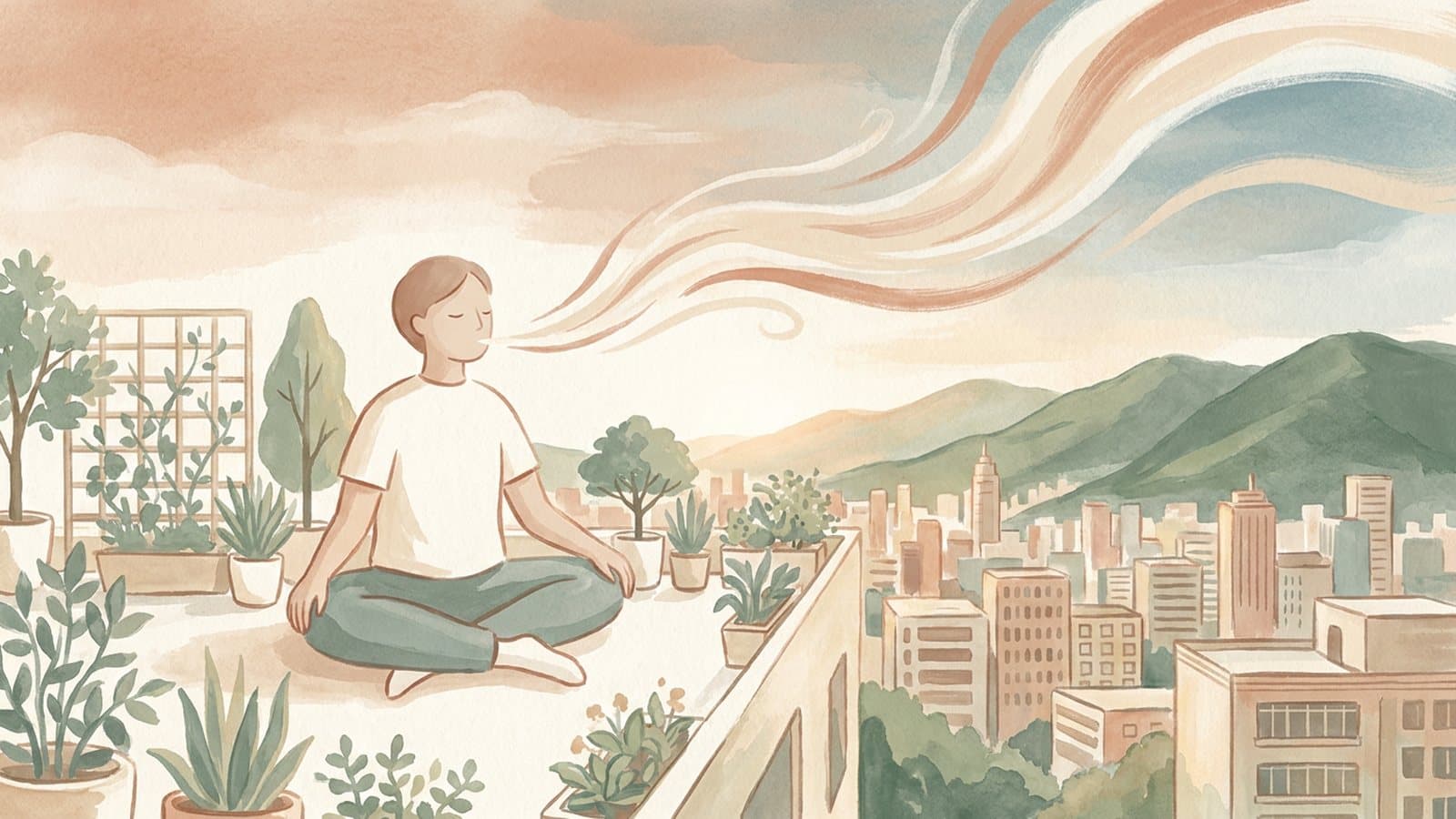
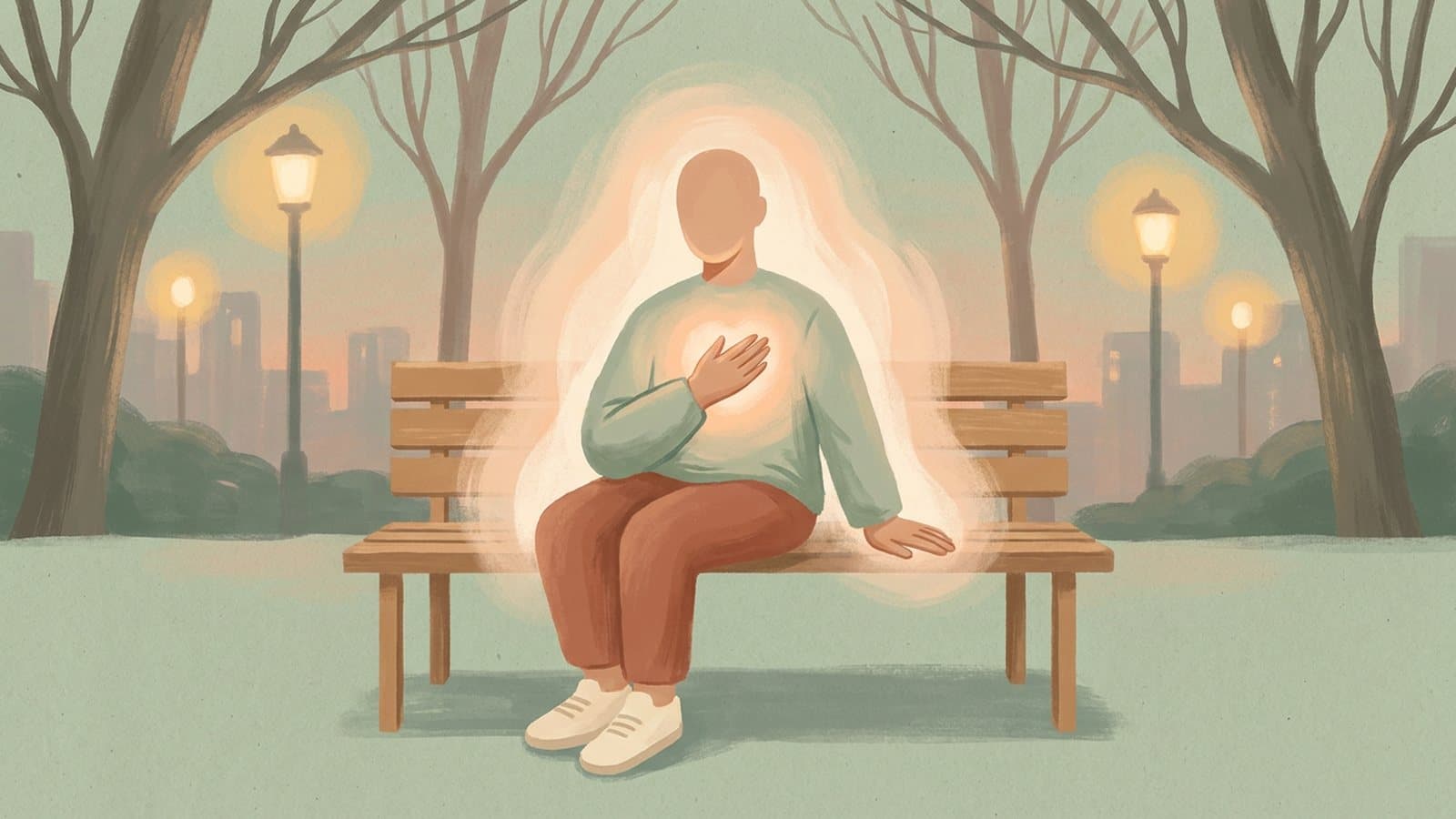
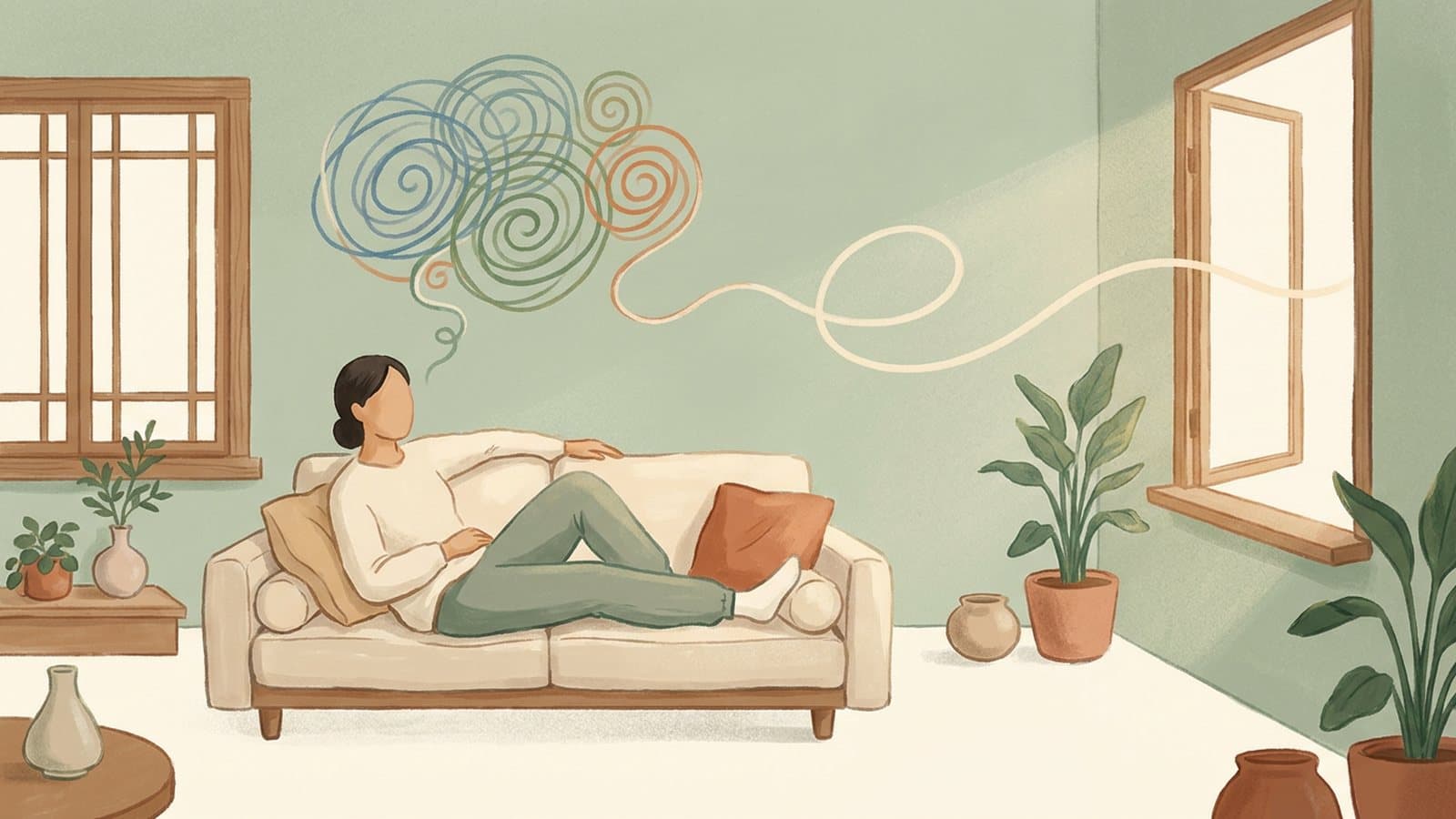
When stress hits, most of it is out of your hands: deadlines, other people's moods, the traffic jam you are stuck in. One thing you can adjust at any moment is your breath.
This guide covers three common stress-relief breathing techniques: box breathing, 4-7-8 breathing and the long exhale. For each one you get the steps, when it fits, and an honest view of what the evidence can and cannot say. None is a magic switch; they are small tools that get easier with practice.
Why breathing can help you relax
Your body runs an autonomic nervous system with two broad sides: one that gets you ready for action, speeding up your heart and sharpening alertness, and one that handles rest and recovery, the parasympathetic side. Most of the time this runs without you. Breathing is unusual because it happens automatically, yet you can also change it on purpose.
Breathing in and breathing out affect your heart differently
Mental health educator Emma McAdam explains that breathing in nudges your heart rate up a little, while slow, gentle exhales bring it down. That rise and fall across each breath is called respiratory sinus arrhythmia (RSA), one important component of what people call heart rate variability (HRV). In her framing, slowing your breath and lengthening the exhale is like gently pressing the body's brake, signalling that you are safe right now.
Fast, shallow breathing can feed anxiety
Psychiatrist Tracey Marks describes the other side. When we are tense we often breathe fast and shallow, which lowers carbon dioxide in the blood. Low carbon dioxide often brings dizziness, tingling and a feeling of not getting enough air, and those sensations can make the body feel even more alarmed. Slowing down helps interrupt that loop.
What the evidence can say
In a narrative review of diaphragmatic breathing, researcher Hamasaki notes a systematic review finding that mind-body practices such as yoga and tai chi can reduce stress in people under high stress, possibly by shifting the balance between the sympathetic and vagal systems. He also states plainly that the effect of diaphragmatic breathing on conditions such as anxiety still needs more research.
So breathing techniques are reasonable, worthwhile self-care. They are not a cure-all, and they do not replace professional help.
Box breathing: an even rhythm for calm focus
Box breathing uses the same count for all four steps, like the four sides of a square. Tracey Marks suggests it for moments when you want to be calm and focused, such as before a presentation, an interview or an important meeting. She also mentions research showing box breathing can reduce stress within minutes.
Steps
- Sit comfortably and let your shoulders drop.
- Breathe in slowly through your nose for 4 seconds.
- Hold gently for 4 seconds.
- Breathe out slowly for 4 seconds.
- Hold again for 4 seconds.
- Repeat for a few rounds, until you feel steadier.
A tip
If the holds feel stuffy, shorten each step to 3 seconds or leave the holds out. Marks also points out that if you are new to breathwork, the 7-second hold in 4-7-8 breathing can be hard, so box breathing is a good place to start.
4-7-8 breathing: the long-exhale version for relaxing
4-7-8 breathing was designed by Dr. Andrew Weil. The key difference from box breathing is that the exhale is twice as long as the inhale. Marks explains that lengthening the exhale relative to the inhale produces a stronger parasympathetic relaxation response than equal breaths, which is why this pattern is often used when a wave of anxiety rises, or before sleep.
Steps
- Sit or lie down so your body is supported.
- Breathe in quietly through your nose for 4 seconds.
- Hold your breath comfortably for 7 seconds.
- Breathe out steadily through your mouth for 8 seconds.
- Repeat a few rounds; there is no need to go on for long.
What the evidence says so far
Marks is careful to add that there is not enough scientific evidence that the 4-7-8 ratio works better than other slow-breathing patterns. If the 7-second hold feels uncomfortable, switching to the long exhale below is completely fine. If your thoughts are still busy at bedtime, she suggests pairing breathing with progressive muscle relaxation or calming music.
The long exhale: the easiest place to start
If you only learn one technique, the long exhale may be the easiest. There is no breath hold and only one rule: breathe out a little longer than you breathe in.
Steps
- Breathe in gently through your nose for 4 seconds; you don't need to fill up completely.
- Breathe out slowly for 6 seconds, letting the air flow out smoothly.
- Avoid sudden stops between in and out; let the turn be smooth, like a wave.
- Keep going for one to a few minutes.
This is the starting ratio Emma McAdam recommends. If 6 seconds is too long, start with a 5-second exhale. Physician Rangan Chatterjee shares another version, "3-4-5": in for 3, hold for 4, out for 5, done for about a minute before reading a stressful email or before a meal.
Next step: resonance breathing at six breaths a minute
Once the long exhale feels natural, try the resonance breathing Tracey Marks describes: in for 5 seconds, out for 5 seconds, no holds, about six breaths a minute. She links this rhythm to better heart rate variability and suggests it for daily transitions, such as arriving home from work or settling in before you start.
Bring your belly in
Hamasaki's review describes diaphragmatic breathing as breathing in slowly and deeply through the nose with one hand on the chest and one on the belly, keeping the chest as still as possible while the belly moves, with about six seconds each for the in-breath and out-breath. You don't have to lie down, but a hand on your belly is a simple way to check you are slowing down and breathing low.
The physiological sigh: done in 30 seconds
The physiological sigh (called "cyclic sighing" in research) is another exhale-focused technique. What makes it different is the two-part inhale: one breath in, a short top-up, then a long breath out. Three rounds take about half a minute, which makes it handy when stress spikes suddenly.
Steps
- Breathe in through your nose for about 2 seconds.
- When you feel nearly full, take one more short sip of air through your nose, about 1 second.
- Breathe out slowly through your mouth for about 6 seconds, longer than the inhale.
- Three rounds is enough; if you want more, keep going for 5 minutes.
What the research says
In 2023 a Stanford University team published a remote, randomized controlled study in Cell Reports Medicine. Participants practised for 5 minutes a day for a month, doing cyclic sighing, box breathing, cyclic hyperventilation with retention, or mindfulness meditation. In the abstract, the researchers report that breathwork, especially the exhale-focused cyclic sighing, produced greater improvement in mood and a greater reduction in respiratory rate than mindfulness meditation. It is one study and needs confirming by more research; it may help some people feel calmer, but it is no replacement for professional support.
To follow along with a guide on screen, try the 1-minute physiological sigh practice.
How to practise so it actually helps
Many people only remember to breathe when they are about to fall apart, then fumble and decide it "doesn't work". Both Marks and McAdam recommend practising while calm. Like exercise, the more regularly you train, the more readily it is there when you need it.
Three easy ways to start
- Set reminders. Use a phone timer every so often and take a few slow breaths.
- Attach it to a moment. Do a minute of long exhales before a meeting or before opening your inbox.
- Leave a gap after stress. On Rangan Chatterjee's podcast, coach Brian McKenzie suggests sitting quietly for 1 to 3 minutes after a high-stress meeting or performance to settle your breathing before you engage with people again.
McAdam adds something important: don't force yourself to relax. If you treat a racing heart or sweaty palms as dangerous and fight hard to suppress them, your body tends to tense up further. Approach practice as "I'm just helping myself slow down", not "I must calm down right now".
For more on looking after yourself in anxious moments, see what to do when you feel anxious. If it's bedtime that gets you, see relaxation breathing when you can't sleep.
Safety notes
Breathing practice should feel comfortable. It is not a breath-holding contest.
- Stop if you feel dizzy. Marks stresses that breathwork should never involve straining. If you feel dizzy, lightheaded or unwell, stop right away and return to your normal, easy breathing.
- Don't gulp air. McAdam notes that lightheadedness often comes from over-breathing by taking in too much air. Instead of filling your chest hard, focus on a gentle, slow rhythm.
- Shorten the counts. Chatterjee cautions that holding the breath or stretching counts too far can leave beginners lightheaded or more anxious. If it feels like effort, cut the numbers down.
- If focusing on your breath makes you tense. People prone to panic sometimes feel worse when they watch their breathing too closely. Open your eyes, look around the room, or try a different way to relax.
- Check with a doctor first. Marks advises people with respiratory conditions to consult a physician before starting regular breathwork. We would add: if you have a heart or circulatory condition, are pregnant, or have any other health concern, talk with a medical professional before you practise.
When to get professional support
Breathing can help you through a hard moment, but it cannot deal with the roots of stress. If tension or anxiety lasts for weeks, affects your sleep, work or relationships, or you have panic attacks, talk to a psychiatrist, a clinical psychologist or a counselling psychologist. If you're in Taiwan and not sure where to start, see how to find a psychologist in Taiwan.
If you feel you can't hold on right now and you are in Taiwan, you can call the 1925 Mental Health Hotline (24 hours), free, and someone will talk with you.
One slow exhale won't solve everything, but it can give you a little more room before your next decision.
This content is health education and self-care information, not medical advice, diagnosis or treatment. If you are in danger, call the 1925 Mental Health Hotline (24 hours) or 119.