Anxiety is rarely just overthinking. Your heart speeds up, your chest tightens, your shoulders lock, and your mind plays the worst-case scenario on repeat.
This article won't ask you to calm down on command. It gives you a toolkit instead: five techniques that start with the body and five that start with the mind. Keep whatever works for you.
Anxiety is an alarm: why it goes off when nothing is wrong
US licensed marriage and family therapist Emma McAdam compares anxiety to a smoke alarm. It is built to be sensitive, because going off too often is safer than missing a real fire. That is why it often sounds for danger that is felt rather than real.
Psychiatrist Tracey Marks describes something similar. Your brain constantly runs safety checks in the background, drawing on memories, cues around you and sensations inside your body, and it often mobilises your body before conscious thought catches up. In evolutionary terms, a missed threat could be fatal while a false alarm only costs some discomfort, so the brain leans towards over-detecting.
Two things follow from this:
- The reaction is real, but it doesn't necessarily mean you are in danger. It is your brain's safety prediction, not a personal defect.
- Short-term anxiety won't harm you. McAdam notes that acute stress responses are something the body is built to wind down on its own; what deserves attention is long-term, chronic stress.
There is one common trap: ordering yourself not to be anxious. McAdam points out that resisting the feeling tells your brain the feeling itself is dangerous, which piles on another layer of stress. A more useful order is to acknowledge it first ("I'm really tense right now") and then do something.
Start with the body: five ways to slow things down
When your heart is pounding and your body is tight, don't start by arguing with your thoughts. Both Marks and McAdam observe that reasoning your way out is very hard while your body is flooded by the stress response. Slow the body down first, and your mind gets room to breathe.
A systematic review by Chin and colleagues looked at brief, single-session exercises. Techniques that change the body's state, such as progressive muscle relaxation, were the most consistently effective at reducing anxiety in the moment. Breathing exercises may also help, but not every breathing method showed a clear effect, and more evidence is needed.
1. Lengthen your exhale
- Breathe in gently through your nose.
- Breathe out slowly, taking longer than you did to breathe in.
- Repeat three times, silently saying "in" and "out."
Dr. Alok Kanojia (Dr. K) explains that anxiety tends to make breathing fast and shallow, and that slowing down and lengthening the exhale helps the body shift out of alarm mode. For more options, see 3 breathing techniques for stress.
2. Cold water or an ice pack
Splash cold water on your face, or hold an ice pack or a cold drink can against your cheeks and around your eyes for about 30 seconds. Marks and Dr. Monica Johnson both describe how cold on the face triggers the so-called dive reflex, which slows heart rate and breathing; it is the face that matters, not the neck. This works best when your heart is racing or panic is intense. If you have a heart or cardiovascular condition, asthma, Raynaud's or strong sensitivity to cold, or a history of fainting, check with your doctor before using intense cold-water methods.
3. Move and burn off the energy
The stress response is preparing your body for action. A few minutes of brisk walking, a flight of stairs, or a minute of jumping jacks or squats can use up that energy, an approach both McAdam and Dr. Johnson recommend. Match the intensity to your fitness, and don't turn it into throwing things or venting rage.
4. Feet on the floor, fingertips together
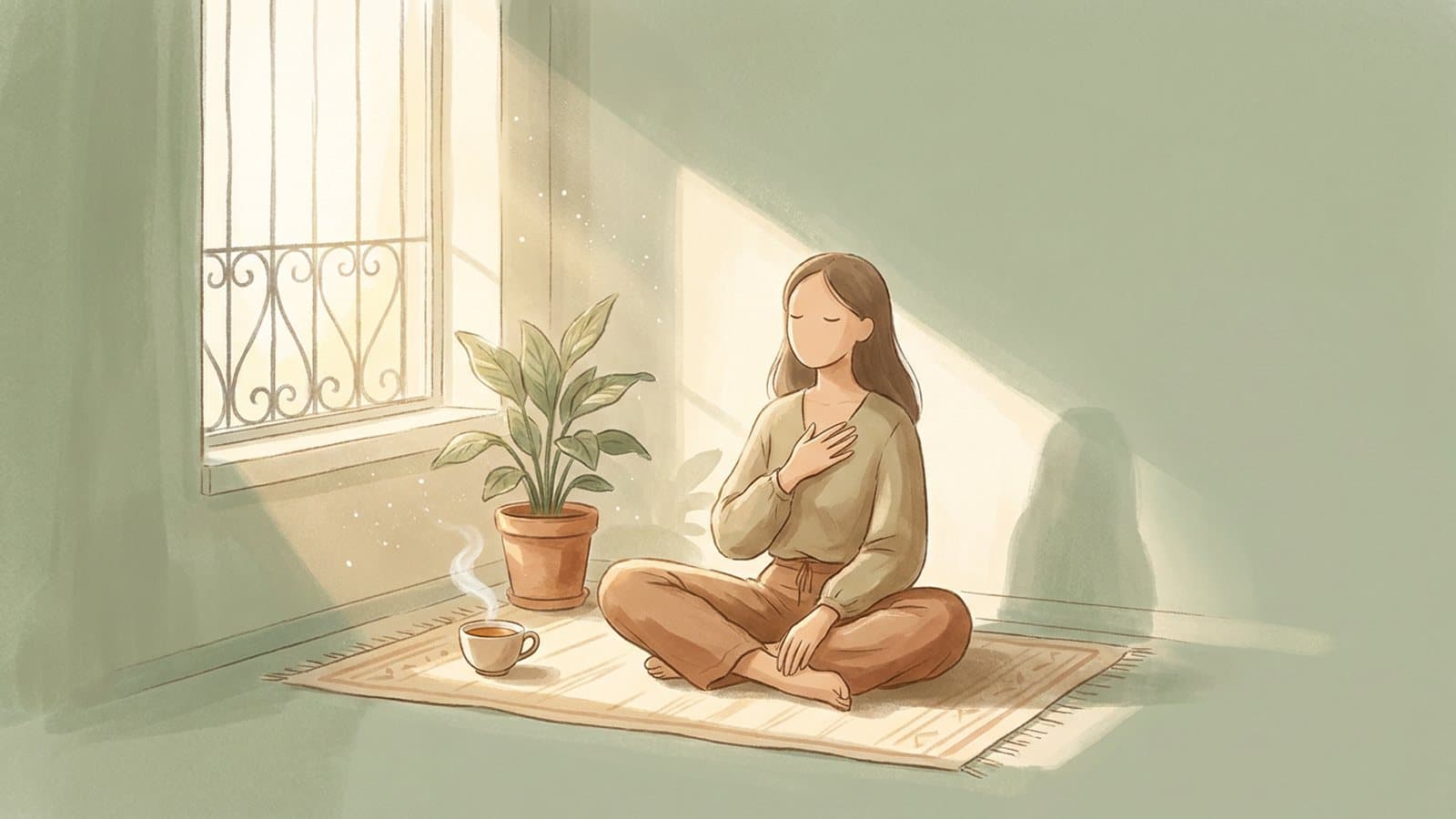
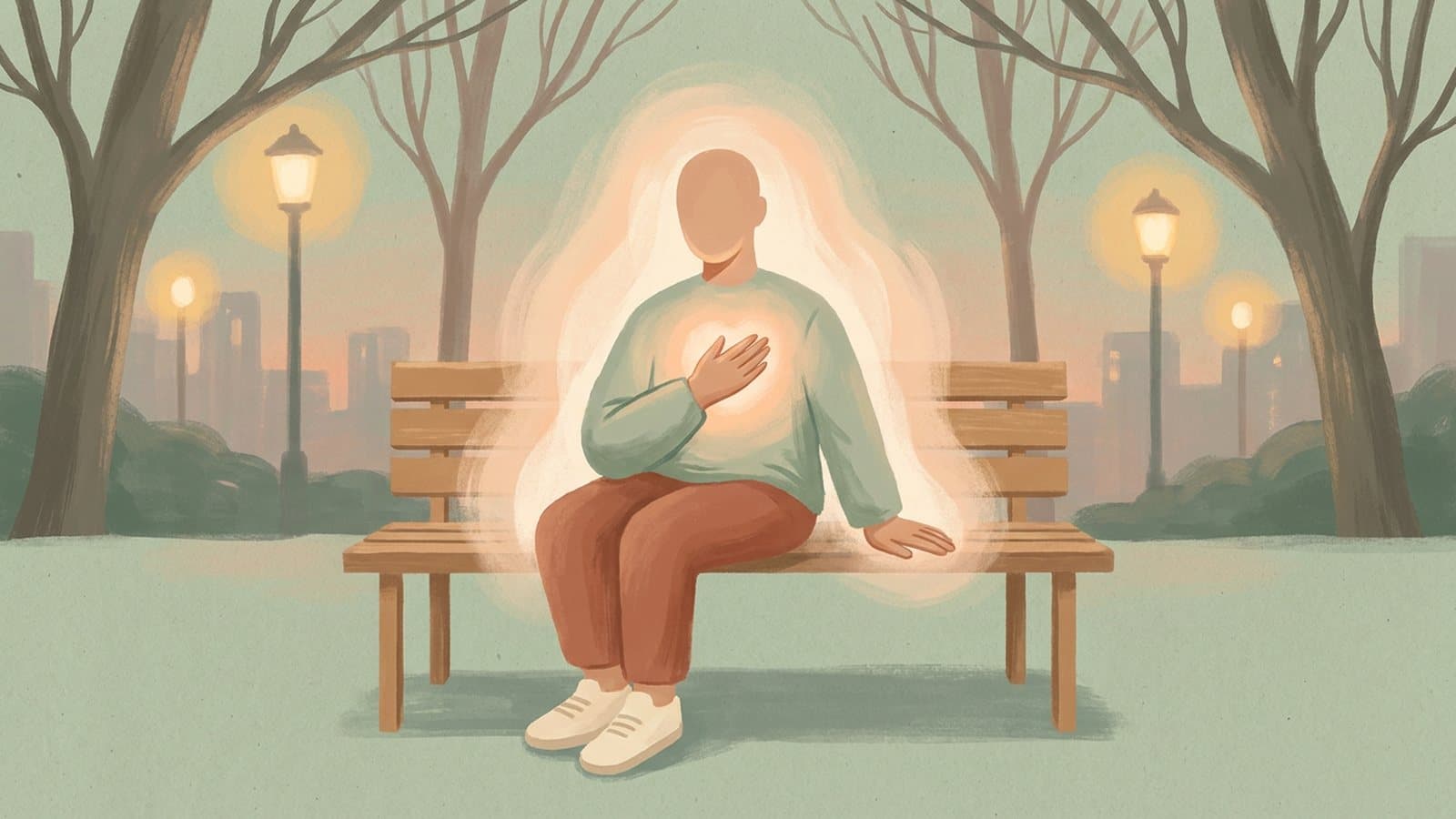
Press your feet firmly into the floor and notice the pressure pushing back. Or rub your fingertips together and focus on the texture of your skin. Marks calls these somatic anchors, and you can do them quietly anywhere.
5. Scan your body and soften one spot at a time
Get comfortable and check your jaw, shoulders, throat, chest, belly and hands for the tightest spot. Notice it as you breathe in, and let it soften a little as you breathe out. If you feel stuck, tense it slightly first, then let go. McAdam notes that many people have been tense for so long they can't tell where they're tight at first, and that's normal.
Start with the mind: five ways to loosen the loop
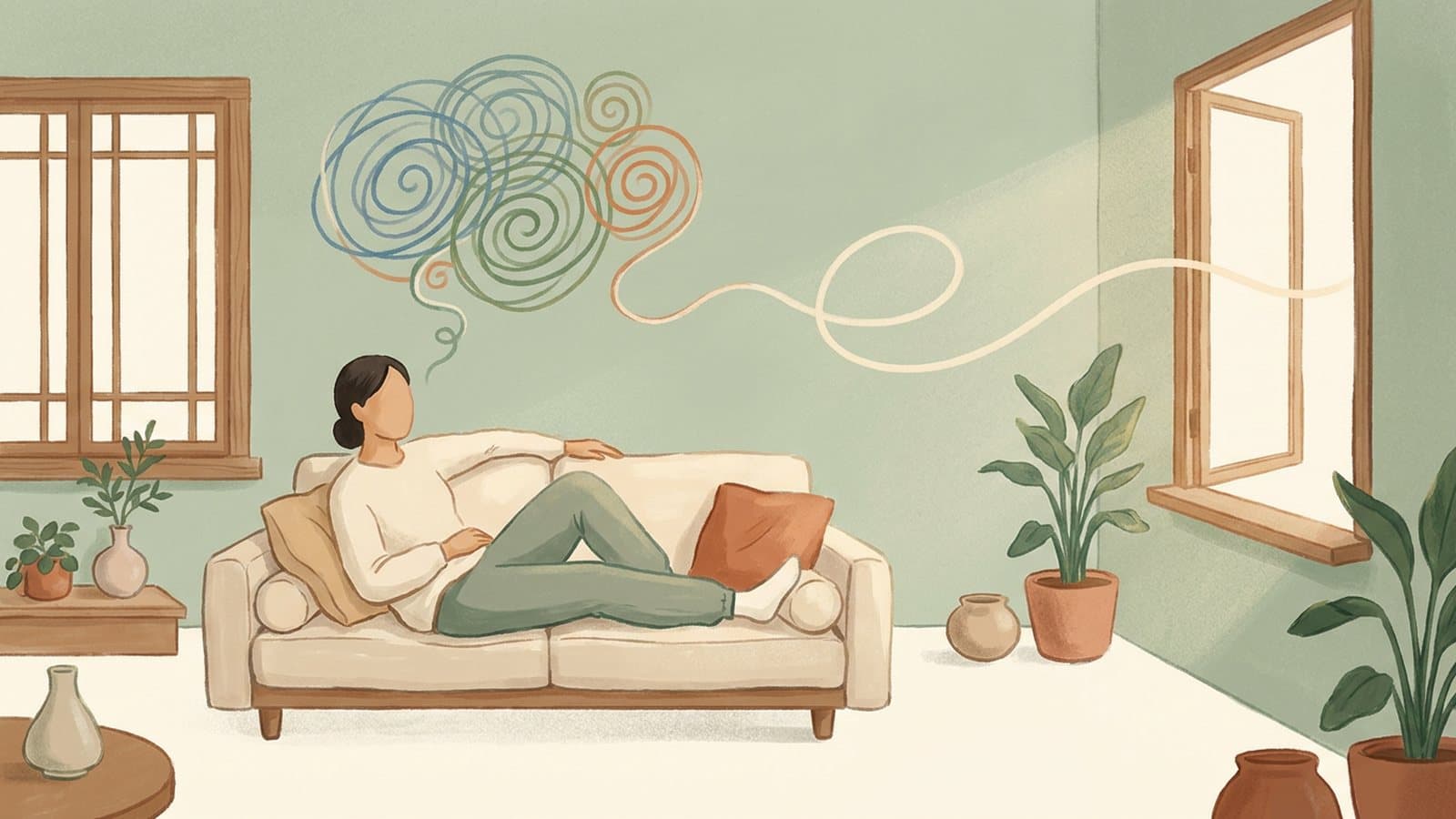
If your anxiety feels more like a mind that won't stop, replaying worst-case outcomes, these may suit you better. They share one key idea: don't argue with the thought; step back and look at it.
6. Describe the feeling in neutral words
Swap "this is terrible" or "I'm done for" with "this is uncomfortable" or "this is intense." McAdam explains that labelling a feeling as awful amplifies the reaction, while neutral description puts a little distance between you and the discomfort.
7. Tracey Marks's three-step check
- Name what is happening in your body: "My chest feels tight."
- Label it: "This may be a safety prediction from my brain."
- Look around: Right here, right now, is there real danger? If not, maybe you are tired, or an old experience has been stirred up.
This won't make the sensation disappear right away. The goal is to keep it from escalating automatically.
8. Put some distance between you and the thought
Add "I'm having the thought that…" in front of the worry. "My presentation is going to fail" becomes "I'm having the thought that my presentation is going to fail." This is called cognitive defusion, and it comes from Acceptance and Commitment Therapy (ACT), a psychotherapy approach. The point is not to debate whether the thought is true. Once you've added the prefix, bring your attention back to whatever you are doing.
9. Write the worry down
Split a page into two columns. On the left, note where you feel it in your body (stomach, neck, hands). On the right, write the specific worry. This is a way of sorting things out that McAdam suggests. A few days later, you can look back and check whether the imagined catastrophe actually happened.
10. Interrupt the loop
When you catch yourself circling again, say "stop" under your breath, then stand up and stretch or walk into another room. Marks calls this a pattern interrupt. It won't solve the worry itself, but it pauses the loop so you can think it through later with a clearer head.
Make it a habit: practise when calm, use it when it counts
Marks points out that if you wait until you are at your most overwhelmed to remember these tools, they are hard to use. Practise while calm, so the response becomes automatic.
- Pick just one or two. If your anxiety shows up in your body, start with the long exhale or feet on the floor. If it shows up as racing thoughts, start with the three-step check.
- Attach it to something you already do. While brushing your teeth, making coffee or opening your laptop, take one minute for a presence check: How is my breathing? Where am I tense? What can I hear?
- Set reminders. McAdam suggests a few alarms a day to prompt you to look around and name three things you see, hear and physically feel.
- Look after the basics. Regular movement and steady sleep are the groundwork for looking after your mood. If sleep is your struggle, see Can't sleep?.
When to reach out
Self-regulation is good everyday self-care, but it has limits. Consider talking to a psychiatrist, clinical psychologist or counselling psychologist if:
- Anxiety or worry keeps interfering with work, school, sleep or relationships.
- You have started organising your life around avoiding anxiety, such as staying home or skipping social situations.
- You have sudden episodes of intense fear, a racing heart or dizziness, and then keep worrying about the next one.
- You worry nonstop about small things almost every day.
- You need alcohol or other substances to keep the anxiety down.
The US National Institute of Mental Health (NIMH) notes that psychotherapy and medication are the two main treatments for anxiety, and many people benefit from a combination. Talk to a doctor about any questions on medication. If you are in Taiwan and don't know where to start, see Looking for a psychologist?.
When to get help right away: sudden, unexplained chest pain, chest pressure or shortness of breath needs urgent medical evaluation to rule out heart problems; in an emergency in Taiwan, call 119. If you are having thoughts of harming yourself, call Taiwan's 1925 Mental Health Hotline (24 hours). If you are in immediate danger, call 110 or 119 (Taiwan emergency numbers). You don't have to get through this alone.
This content is health education and self-care information, not medical advice, diagnosis or treatment. If you are in danger, call the 1925 Mental Health Hotline (24 hours) or 119.