One moment you're fine; the next your heart is pounding, you can't get enough air, your hands are shaking and one thought takes over: "Am I dying?" Panic attacks often arrive like this, without warning and sometimes without any obvious reason.
If you've just been through one, know this first: you're not weak and you're not exaggerating. Those sensations are real. This article explains what is happening, what you can do in the moment, and how to keep panic from taking over your life afterwards.
If physical causes haven't been ruled out yet, see a doctor. Panic symptoms can look a lot like heart, lung or thyroid problems, so doctors usually start with a physical exam, blood tests or heart tests to rule those out. If you have sudden chest pain with sweating or shortness of breath, call emergency services (119 in Taiwan) instead of deciding for yourself that it's panic.
What a panic attack feels like: pounding heart, breathlessness, fear of losing control
According to MedlinePlus (U.S. National Library of Medicine) and the medical reference StatPearls, a panic attack is a sudden surge of intense fear or discomfort. It usually peaks within minutes and can last from a few minutes to over an hour. Common sensations include:
- A racing or pounding heart that can feel like a heart attack
- Shortness of breath, or a feeling of choking
- Sweating, chills or hot flashes, trembling
- Dizziness, weakness, tingling in the hands or feet
- Chest pain or tightness, stomach pain, nausea
- Feeling that things are unreal, or that you are detached from yourself
Alongside the body, the mind often fills with fear of losing control, of losing your mind, or of dying.
Two things are worth knowing. First, panic attacks can happen when there is no real danger, sometimes even while you're resting or calm. Second, having one doesn't mean you'll develop panic disorder. Many people have only one or two in their lifetime and get better. What deserves attention is attacks that keep coming back, or a growing worry about "when the next one will hit."
Why the body suddenly sounds the alarm: fight or flight
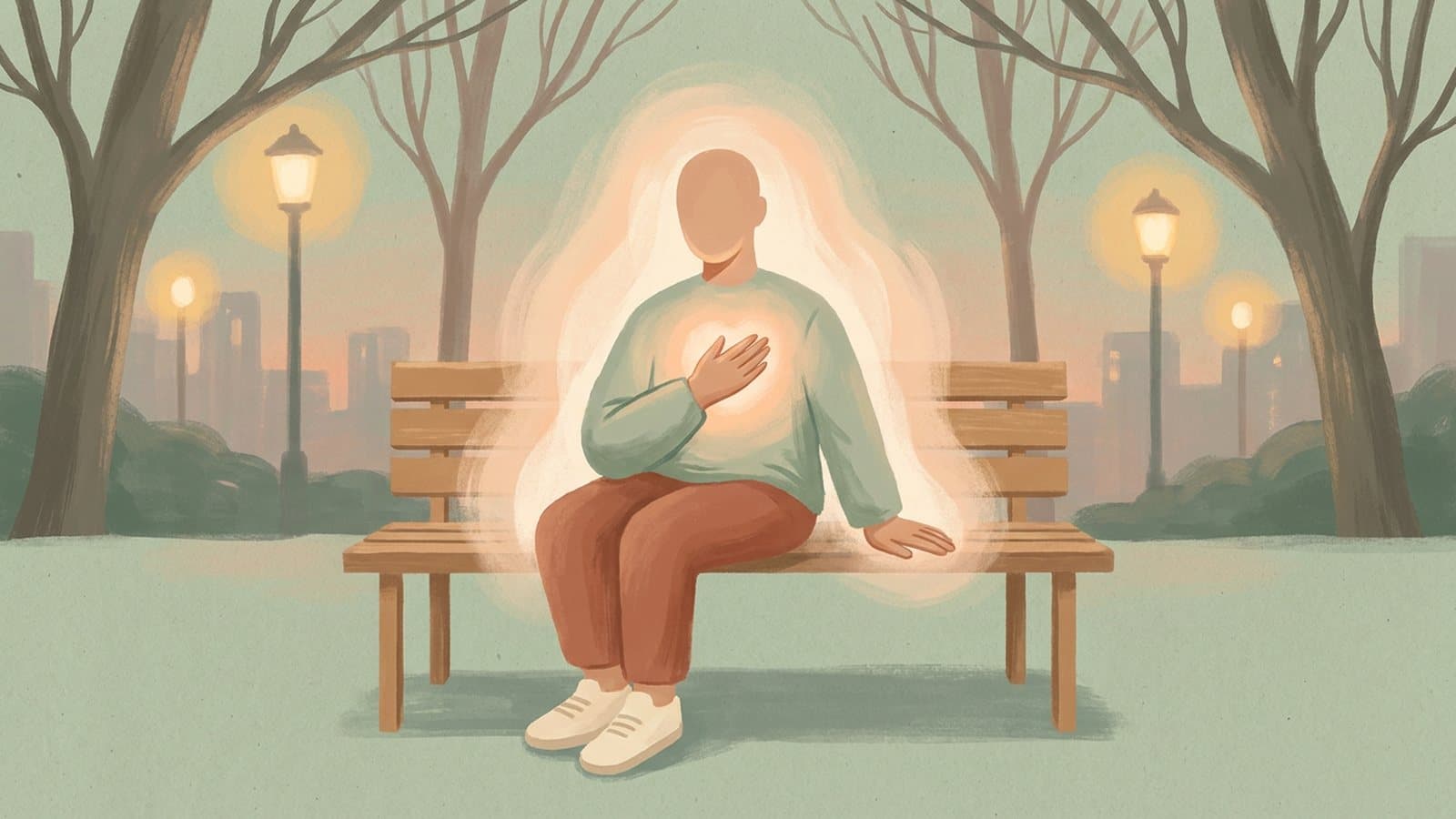
The OpenStax psychology textbook explains that when the brain senses a threat, the sympathetic nervous system and adrenal glands release adrenaline, noradrenaline and cortisol. Heart rate and breathing speed up, muscles tense, pupils dilate, and the whole body gets ready to confront or escape danger. This is the fight-or-flight response.
The system is there to protect you. A panic attack is like that alarm going off when there's no fire, at full volume.
The catch is that alarm signals are easy to read as proof that something is wrong. Your heart speeds up, you think "something's wrong with my heart," the fear grows, the body tenses further, and the loop climbs. One of OpenStax's self-care suggestions is to notice catastrophic interpretations of normal body sensations, such as a faster heartbeat, and gently check whether that reading is actually true.
As for why some people have repeated attacks, MedlinePlus is plain about it: the cause is unknown. Researchers think genetics, brain biology, environment and major stress may all play a part. In other words, it isn't a character flaw, and no single experience explains it.
What to do during an attack: slow the breath, name it
In the moment, the goal is not to make the feelings vanish but to stop adding fuel. These two things come from StatPearls' self-care suggestions; you can try them during an attack:
1. Slow your breathing with the diaphragm
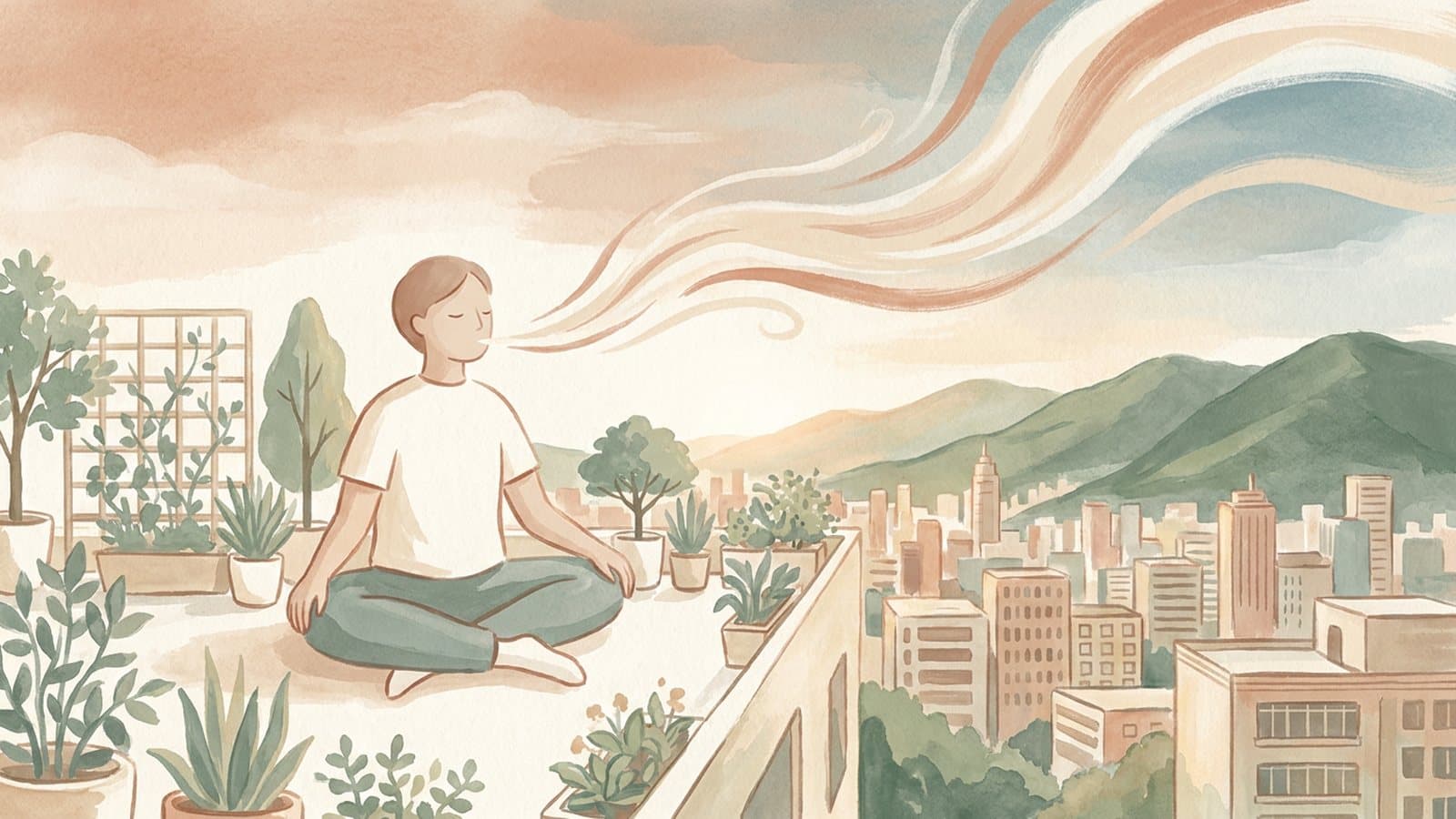
During panic it's easy to hyperventilate without noticing. Try slow, steady diaphragmatic (belly) breathing to bring your breathing rhythm down. For how to do it, see 3 breathing techniques for stress.
2. Name what is happening
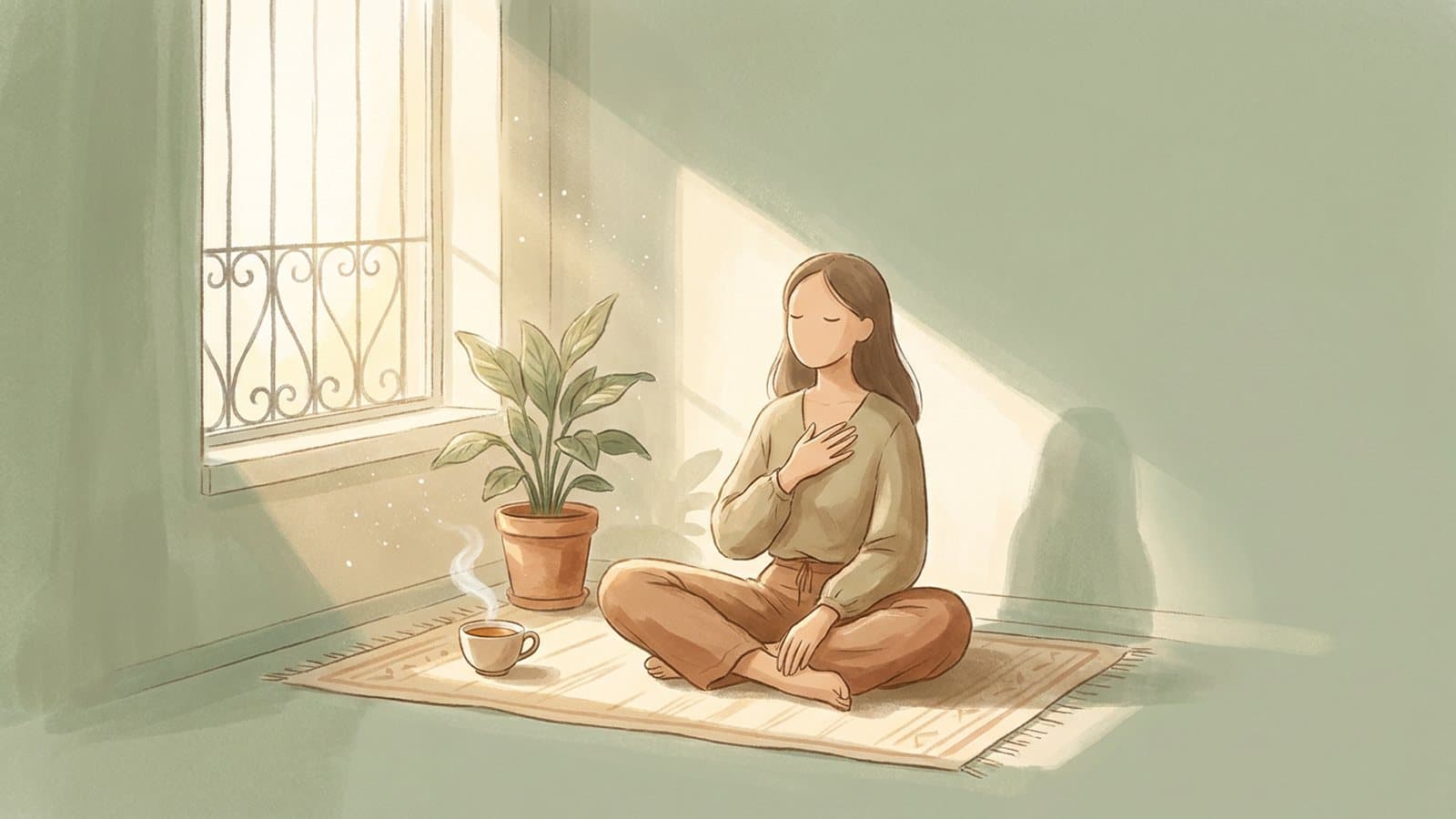
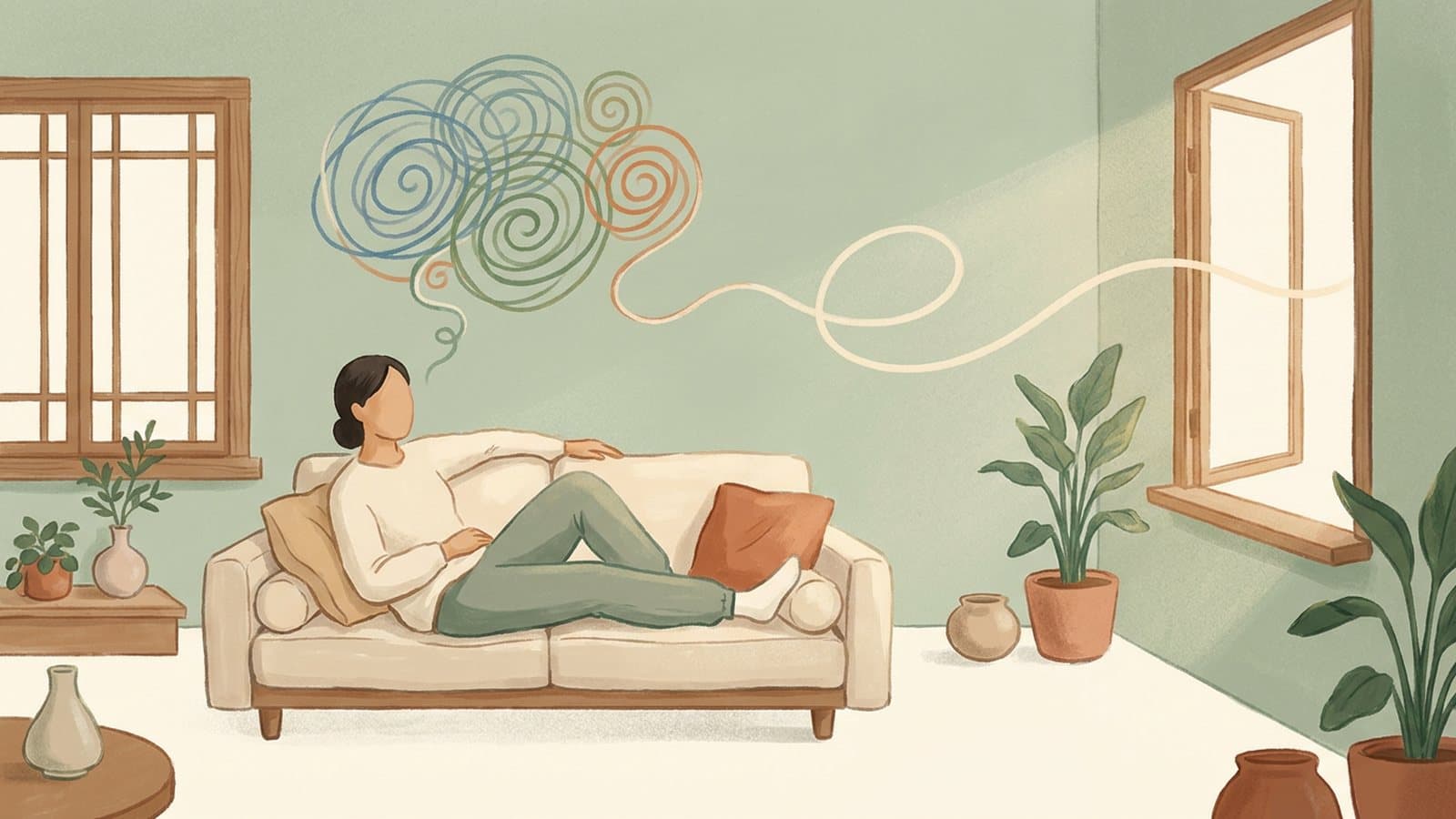
Tell yourself: "This is panic. It's very uncomfortable, but it's temporary and it isn't dangerous." StatPearls suggests learning to spot the early body signals and gently reminding yourself that the panic is temporary. This isn't about pretending you're not scared; it gives your brain a different reading: this is an alarm, not a fire.
What to avoid: using alcohol or nicotine to calm down. StatPearls notes that these can make panic symptoms worse.
Ruling out physical causes always comes first. If you're not sure this is panic, or chest pain or breathing difficulty keeps getting worse and doesn't ease with rest, get medical help or call emergency services right away.
After an attack: don't start avoiding everything
Panic tends to grow quietly not during the attack itself but afterwards. MedlinePlus and StatPearls both describe people starting to fear or avoid places where they've had attacks, like the metro, a supermarket or a meeting room, and gradually reshaping their routines just to avoid another one.
Avoiding brings relief in the moment, but your world gets a little smaller each time. More helpful directions:
- Return to daily life in small steps. OpenStax recommends gradually facing manageable everyday stressors rather than avoiding them entirely. For example, ride one metro stop at a quiet time, then slowly extend it.
- Let the people around you know how to help. StatPearls suggests involving family or trusted friends so they can respond with support rather than helping you avoid.
- Write down your worries and check them later. Note what you fear will happen, then look back to see whether it did. Over time this loosens catastrophic predictions.
- Look after the basics. Steady sleep, regular physical activity, balanced meals that avoid blood-sugar swings (which can feel like anxiety), and cutting back on alcohol and nicotine are all on StatPearls' lifestyle list.
If anxiety shows up for you in other moments too, Feeling anxious? 10 self-regulation techniques collects more in-the-moment tools.
When to see a psychiatrist or psychologist
Practising on your own helps, but you don't have to carry this alone. For readers in Taiwan, consider seeing a psychiatrist (身心科 / 精神科) for an assessment, with a clinical psychologist (臨床心理師) or counselling psychologist (諮商心理師) helping alongside, if:
- You have repeated episodes of sudden, intense panic or physical anxiety.
- Worry about the next attack starts limiting going out, commuting, travel or work.
- You rely on alcohol or other substances to get through panic.
- Your mood keeps sinking, you feel hopeless, or the distress runs deep.
Medical references describe professional help as usually combining psychological care with medication when a doctor judges it useful. Cognitive-behavioural approaches are a main psychological option; they often include breathing retraining and work on catastrophic thinking and avoidance habits. Whether medication is needed, and how to use it, is a conversation to have with a doctor. If you're unsure where to start, see Looking for a psychologist in Taiwan?.
Get help right away (numbers for Taiwan):
- Sudden unexplained chest pain or pressure, shortness of breath, fainting or confusion: call 119 or go to a hospital immediately.
- Thoughts of harming yourself, or feeling you can't keep yourself safe: call the 1925 Mental Health Hotline (24 hours), free, or 1995 Lifeline, or 1980 Teacher Chang; if you are in immediate danger, call 110 or 119. Outside Taiwan, contact your local emergency or crisis line.
Panic can make you feel alone and out of control. But it can be understood, and it can loosen over time. You don't have to face it alone.
This content is health education and self-care information, not medical advice, diagnosis or treatment. If you are in danger, call the 1925 Mental Health Hotline (24 hours) or 119.