The night before a presentation, you rehearse it a dozen times in your head. When it's your turn to speak in a meeting, your heartbeat is loud enough to hear and your face goes red. You get home from a gathering and replay every line: "Did I say something wrong? Do they think I'm weird?"
If this sounds familiar, you're not alone. Fear of being watched or embarrassed is a very common experience. This article looks at how social anxiety works and where you can start practising.
How social anxiety differs from shyness
The medical reference StatPearls describes social anxiety disorder as persistent fear, out of proportion to the actual situation, of settings where you might be watched, judged or embarrassed. Typical situations include speaking in public, meeting new people and everyday interactions.
It isn't the same as shyness. StatPearls notes that shyness is a common personality trait, whereas social anxiety disorder involves fear out of proportion to the situation that clearly disrupts daily life, study, work or relationships, usually for six months or more.
Social anxiety tends to show up on two levels:
- Body: a racing pulse, sweating, trembling, blushing.
- Behaviour: avoiding eye contact, speaking very softly, giving short replies, or staying away from feared situations altogether.
Some people feel it mainly when presenting or performing; others feel uneasy in everyday settings like small talk or eating in front of others. StatPearls also notes that most people first notice these difficulties before the age of twenty.
Recognising yourself here doesn't mean you have social anxiety disorder. Whether it is social anxiety disorder has to be assessed and diagnosed by a psychiatrist.
The script in your head: the spotlight effect and constant self-monitoring
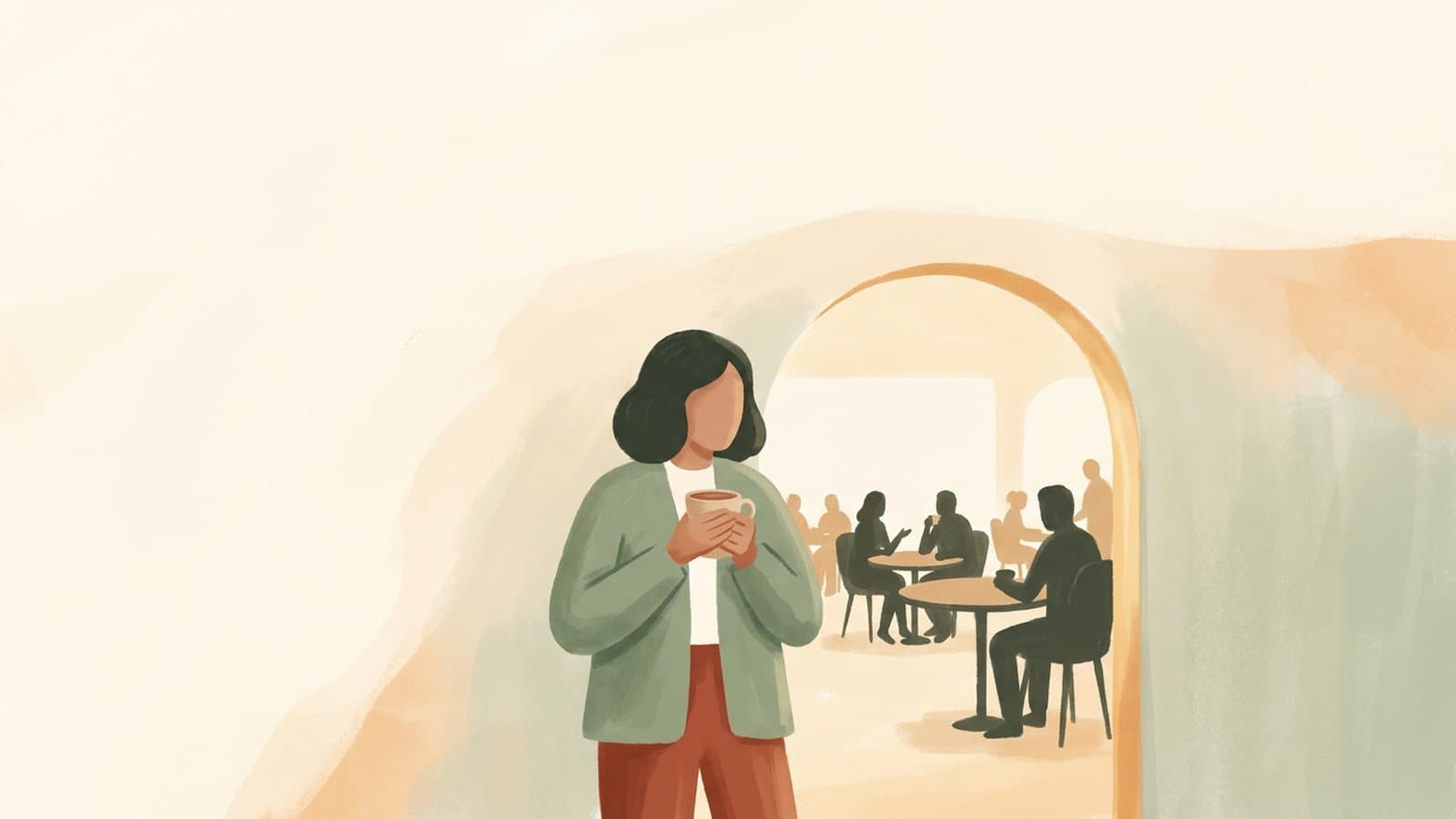
A lot of social anxiety happens in the mind. On the Taiwanese show 海苔熊的心理話, host 海苔熊 talks about the "spotlight effect": we often feel everyone is watching and judging us, but most people are busy with their own lives. And everyone sees others through something like a funhouse mirror, distorted and partial, so it doesn't reflect who you really are.
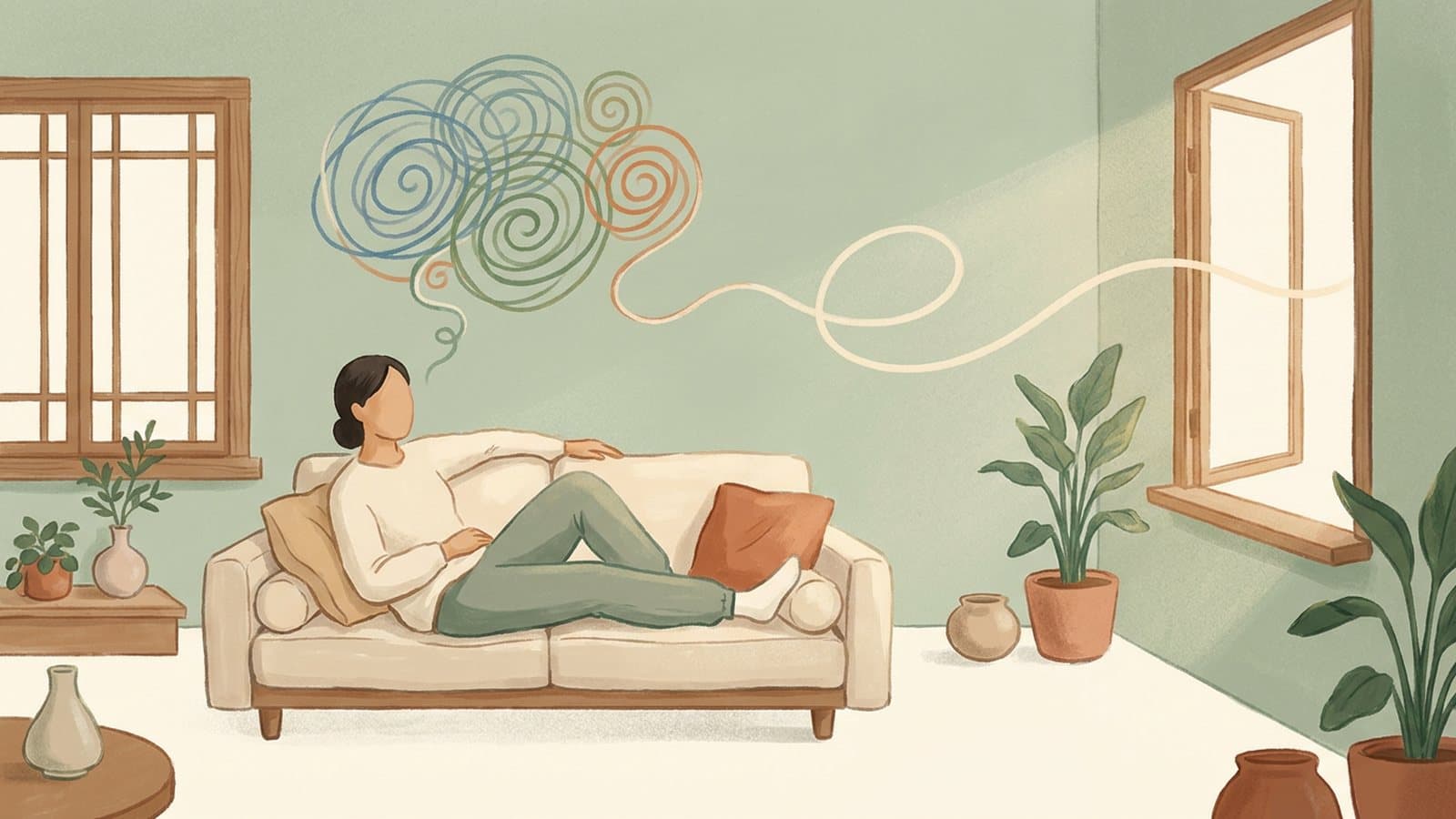
In a conversation with host Emma McAdam on the Therapy in a Nutshell channel, clinical psychologist Deborah Dobson describes another loop: with social anxiety, attention turns inward to monitor your heartbeat, your blushing or other body reactions, while assuming others are judging you harshly. The more attention goes inward, the less you see of how people are actually reacting, and the more real the script feels.
海苔熊 also points out that wearing yourself out mentally often comes from trying to control things you can't change, such as what other people think. If you notice yourself replaying a conversation after an event, ask: how much of this can I actually control? Think about what you might do next time for the part you can control, and practise setting aside the part you can't.
Why safety behaviours keep anxiety going
"Safety behaviours" are small actions people use to lower anxiety when they feel threatened. In social anxiety, common ones include:
- Avoiding eye contact, speaking quietly, keeping still
- Preparing an excuse so you can leave at any moment
They sound sensible, so what's the problem? The Wikipedia overview of safety behaviours gives several reasons:
- They work in the short term but keep anxiety around. When anxiety drops after a safety behaviour, you conclude "good thing I did that," though the drop may simply be because time passed.
- You never get to find out the situation was safe. A presentation can look terrifying but rarely causes real harm. If you keep avoiding, you never see that for yourself.
- They can invite what you fear. Speaking softly, avoiding eye contact and keeping still are meant to reduce criticism, but they can make others see you as aloof or unwelcoming.
Deborah Dobson also notes that stepping out to the restroom to settle yourself is fine as a short pause; leaving the event entirely strengthens the habit of avoidance.
Practise in small steps: start with easier social situations
The way forward is to do, bit by bit, the things you'd normally avoid. One tool used in psychological care is the exposure hierarchy. Wikipedia describes it roughly like this:
1. List situations that make you nervous
Write down several social situations that make you uneasy, from mild to most frightening. For fear of presenting: choosing a topic, watching others present, practising alone, presenting to two or three familiar people, presenting to the whole team.
2. Rate each one
Score each from 0 to 100, where 0 is no fear and 100 is the most distress you've ever felt. Choosing a topic might be a 20; speaking to a large audience a 95.
3. Start at the bottom
Order them by score and start with the lowest, moving up once a step is done. In professional settings this list is usually built together with a psychologist; on your own, pick steps you can genuinely manage, with no need to start at the top.
Deborah Dobson recommends small daily "random acts of exposure" to build a sense that you can do it. For example:
- In a busy place, look up and count how many people wear glasses or hats, or look a bit nervous too. Putting your attention outward shows that most people are busy with their own business. When you first look up, you may suddenly feel conspicuous and uncomfortable; that's normal.
- At a gathering, find someone who also looks uncomfortable and start a conversation.
When body reactions are strong, Dobson and McAdam share some in-the-moment options: clench your hands under the table, or ask someone to repeat a question to give yourself time to steady your breathing. You can also reframe the reaction: "I'm shaking because this matters to me, not because I'm falling apart."
How you talk to yourself
Social anxiety often comes with a harsh inner voice: "You blew it again." "You just can't talk to people." On the Tracey Marks YouTube channel, Marks shares ways to adjust self-talk:
- Drop absolute words. Replace "I always" or "I never" with something specific: "I got stuck at the start of today's presentation."
- Add "yet" or "I'm learning." "I'm not comfortable speaking up in groups yet" leaves more room than "I just can't."
- Separate the behaviour from yourself. "That didn't go well this time," not "I'm a failure."
- Swap blame for questions. Ask "what could I adjust next time?" rather than "why am I so bad at this?"
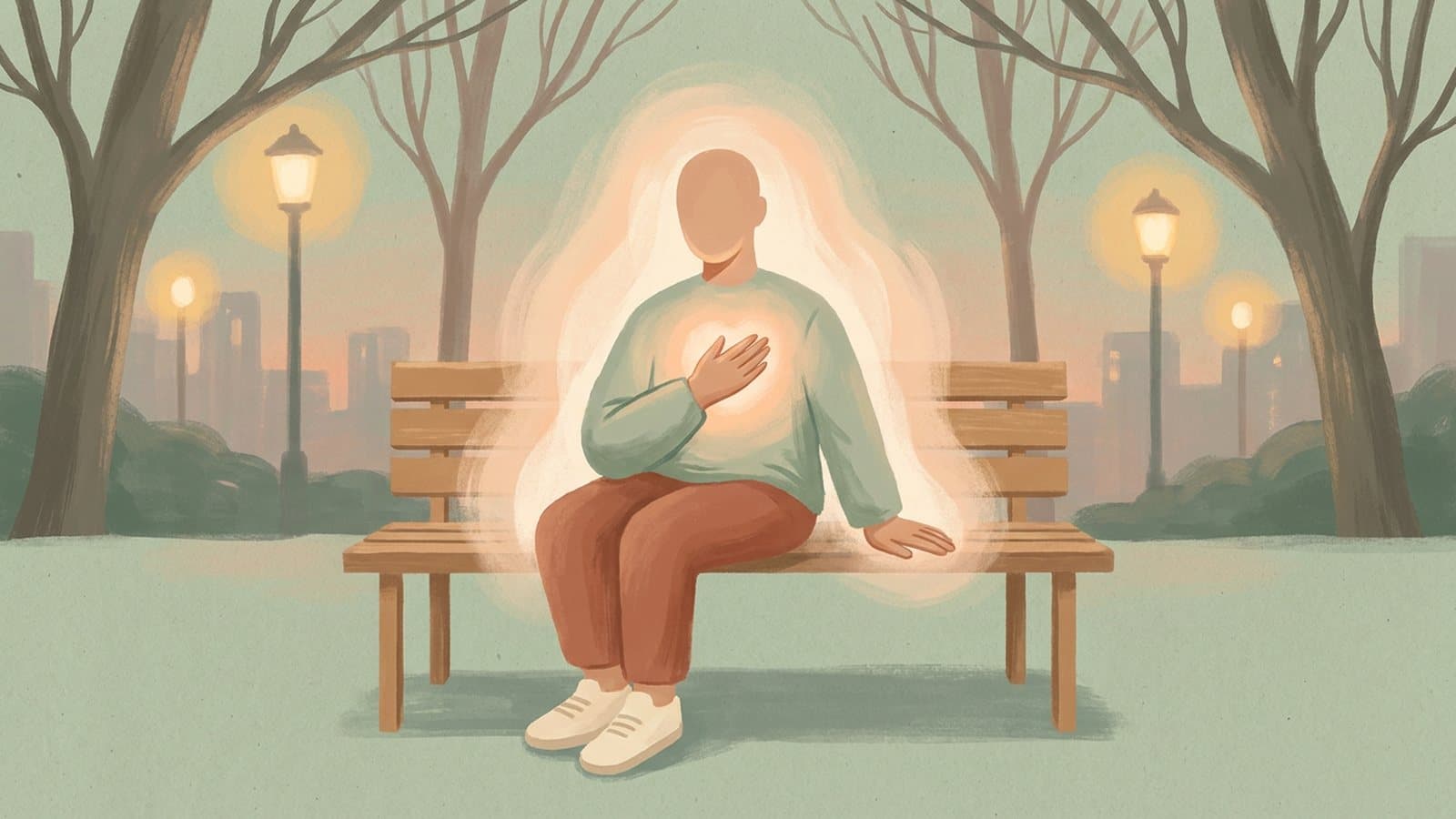
This isn't about blind optimism or forcing out positive thoughts. Marks stresses that reframing has to stay grounded in reality; the aim isn't to wipe out every negative thought but to notice it, soften it and redirect it. Dobson's conversation likewise emphasises being kinder to yourself: learning to tolerate social imperfection and still live well.
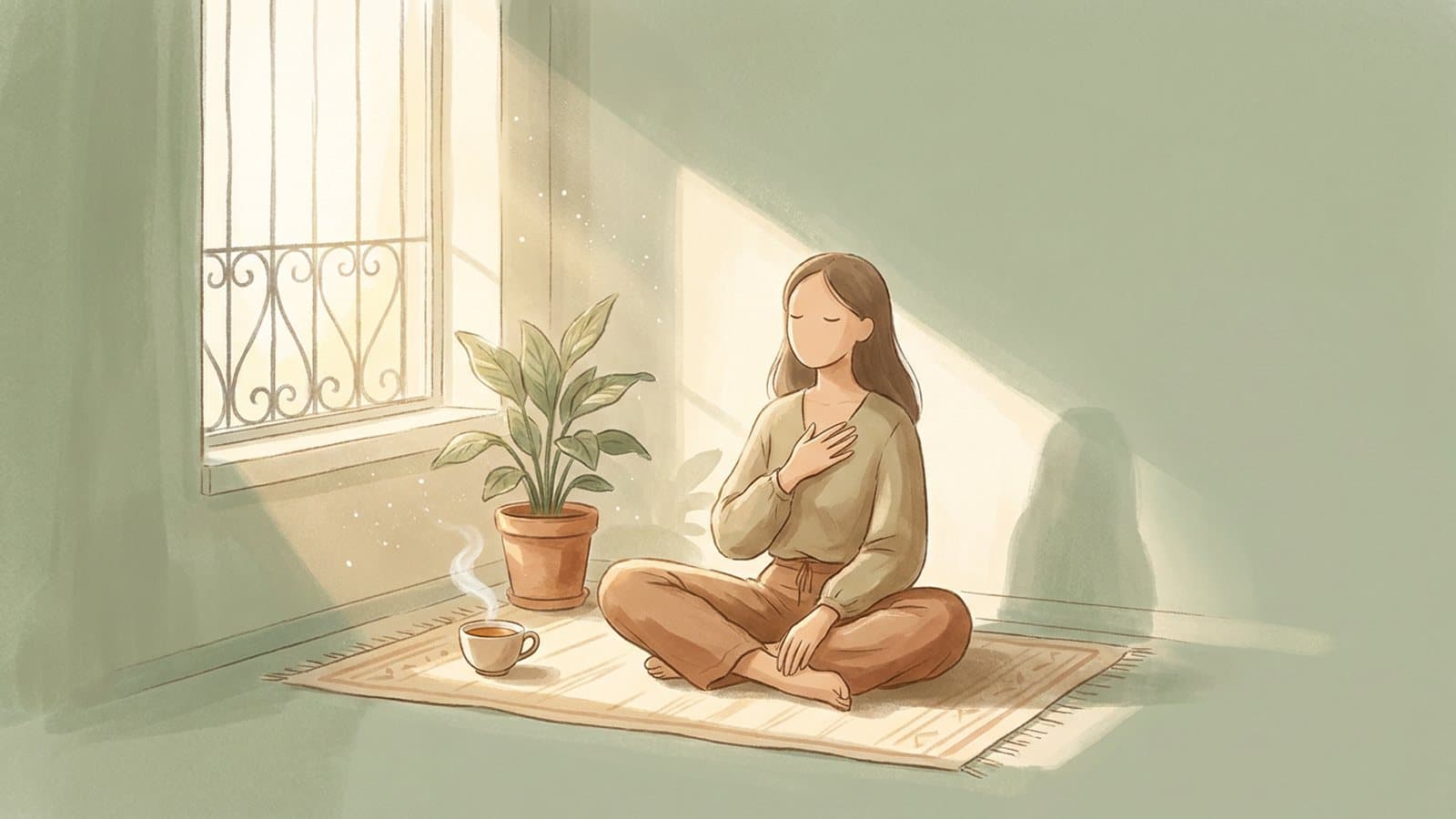
If your body reacts strongly when you're nervous, Feeling anxious? 10 self-regulation techniques has more ways to slow it down.
When to get help
For readers in Taiwan, consider seeing a psychiatrist (身心科 / 精神科) for an assessment, with a clinical psychologist (臨床心理師) or counselling psychologist (諮商心理師) helping alongside, if:
- Fear or avoidance of social situations has lasted months and clearly affects school, work or relationships.
- You've given up opportunities you want, such as interviews, promotions or friendships, because of fear of judgement.
- You need alcohol or other substances to get through social situations.
- You've felt low for a long time, or increasingly isolated.
StatPearls notes that cognitive-behavioural psychological approaches and medication prescribed after a doctor's assessment both have strong evidence behind them, and that the benefits of cognitive-behavioural approaches usually last longer after they end. Decisions about medication belong with a doctor. For where to start, see Looking for a psychologist in Taiwan?.
If you feel very low or have thoughts of harming yourself, in Taiwan call the 1925 Mental Health Hotline (24 hours), free, or 1995 Lifeline, or 1980 Teacher Chang; in immediate danger call 110 or 119. Outside Taiwan, contact your local crisis line.
Social anxiety isn't a character flaw, and it isn't about not trying hard enough. It's a difficulty that can be understood and practised with. Start with the smallest step.
This content is health education and self-care information, not medical advice, diagnosis or treatment. If you are in danger, call the 1925 Mental Health Hotline (24 hours) or 119.