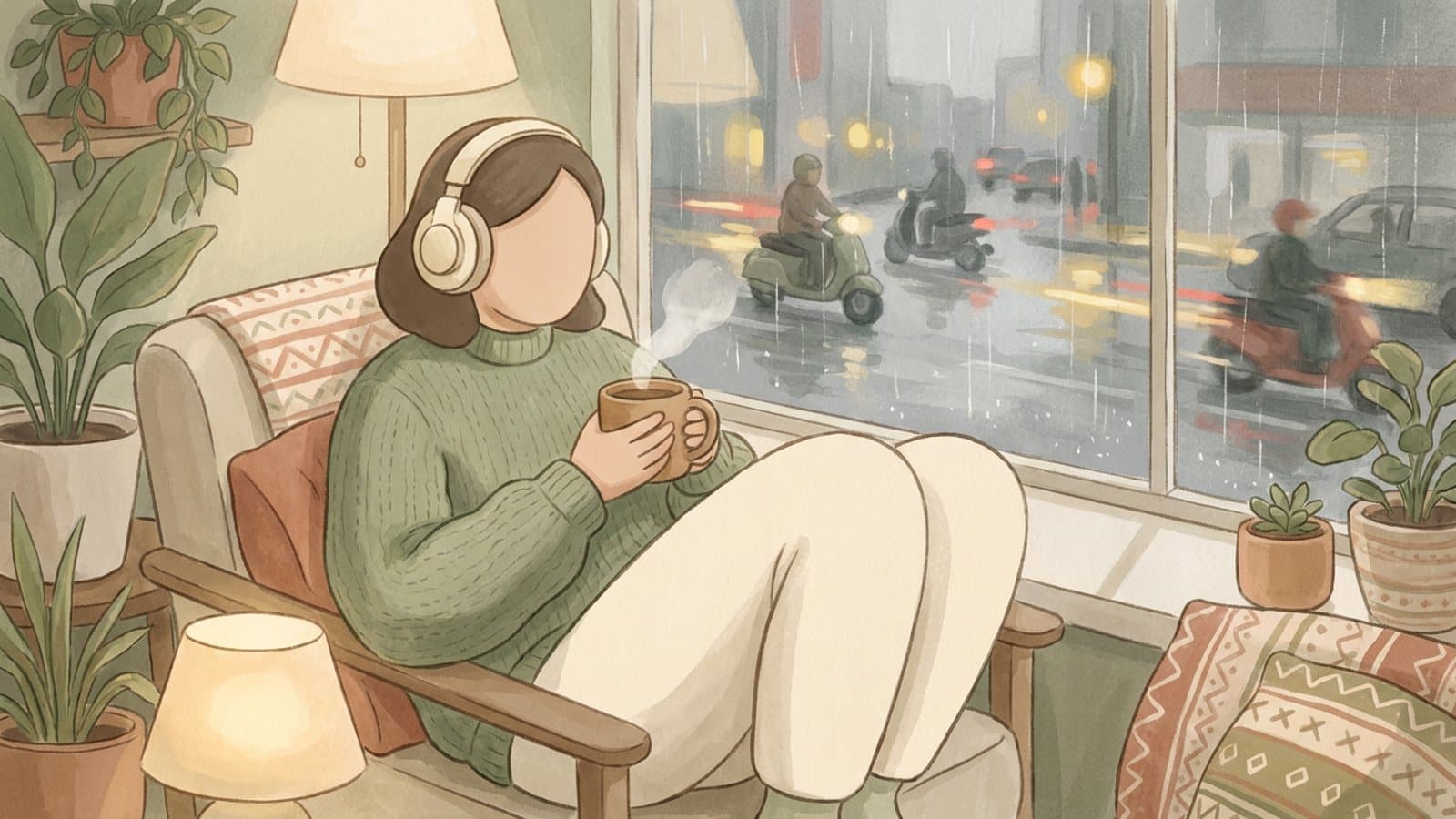
Maybe you have heard it since childhood: "You're so sensitive." "You're overthinking it." After an evening at a busy night market, your friends want to keep going and you want a dark room and silence. A colleague's slightly cool tone stays with you for the rest of the day.
If that sounds familiar, here is the reassuring part: this is probably not a sign that something is wrong with you. Your nervous system may simply take in more and process it more deeply.
What high sensitivity is: a temperament, not a diagnosis
The idea of the "highly sensitive person" (HSP) comes from the work of psychologists Elaine Aron and Arthur Aron. In a 1997 paper they called the trait sensory-processing sensitivity and developed a scale to measure it.
Put simply, highly sensitive people process sounds, light, smells, facial expressions and the general atmosphere more thoroughly. Emma McAdam, a licensed marriage and family therapist in the US, notes that an estimated 15 to 30 percent of people are born with this trait. You are far from alone.
Two things are worth saying clearly:
- It is not an illness or a diagnosis. High sensitivity is a temperament trait, much like being naturally energetic or slow to warm up. Online sensitivity quizzes can help you understand yourself, but they are self-reflection tools, not formal psychological assessments.
- Inborn does not mean fixed. The OpenStax psychology textbook explains that personality traits arise from many genes interacting with the environment. Your underlying tendencies stay with you, but how they show up keeps changing with learning, maturity and life experience.
What highly sensitive people often notice
Everyone is different, but highly sensitive people often describe experiences like these:
- Loud, crowded or brightly lit places wear them out quickly.
- They pick up on other people's moods fast, and sometimes feel tense without knowing why.
- They think a lot before deciding, and replay things afterwards.
- A fully booked day leaves them feeling completely emptied by evening.
Psychiatrist Tracey Marks explains that our nervous systems constantly scan the people around us, mirroring their expressions, tone of voice and body state, and syncing with their tension or calm. People with high empathy, a naturally reactive nervous system, or a childhood in which they had to track adults' moods to stay safe are more likely to absorb others' emotions.
Be careful, though, not to explain every struggle through sensitivity. Emma McAdam points out that not everyone with anxiety is highly sensitive, even though the two often overlap, and that sensitivity is no reason to skip learning to regulate emotions. The point of understanding your temperament is to care for yourself better, not to wear a label that says "this is just how I am".
The strengths of sensitivity
Growing up somewhere that prizes toughness, extroversion and "not overthinking", many sensitive people learn to feel ashamed of their reactions. McAdam argues that this ongoing fight against your own nature adds to anxiety in its own right.
She describes four common strengths:
- Emotional sensitivity: strong empathy and attunement in relationships.
- Sensory sensitivity: noticing details others miss.
- Depth of processing: thinking long and deeply, which often leads to fresh solutions.
- Intuition: reading a room quickly, with a strong sense of right and wrong.
Intuition still needs a reality check. Sensitivity can sometimes amplify perceived threats, so after "I can feel it", it helps to ask, "What is the evidence?"
A small exercise: recall one time your sensitivity helped you or someone else. Perhaps you were the first to notice a friend was struggling, or you caught an error in a report that everyone else missed. Write it down so you can see the other side of this trait.
Everyday self-care: leave your nervous system some room
You do not need to become less sensitive. What helps is managing the balance between stimulation and rest. Here are some places to start:
- Find your "too much". McAdam suggests tracking how you respond to different senses: sound, light, touch, smell, movement. Which do you avoid, and which actually calm you? Everyone's mix is different.
- Plan recovery time in advance. After a dinner, a presentation or a lively event, deliberately keep some quiet time free instead of stacking the next commitment right behind it.
- Adjust your surroundings instead of gritting your teeth. A quieter desk, earplugs on the commute, softer lighting at home: all of these save energy.
- But don't hide from everything. McAdam also warns that avoiding all stimulation can lower your tolerance over time and shrink your comfort zone. She recommends spending planned time in a "stretch zone" that is slightly uncomfortable but manageable, for example not wearing noise-cancelling headphones all day, while not forcing yourself to stay in a state of panic.
- Check in before and after being with people. Tracey Marks suggests asking yourself "How do I feel right now?" before an interaction, and again afterwards. Comparing the two helps you tell which feelings are yours and which you brought home from someone else.
- Observe without absorbing. When someone is overwhelmed, you can acknowledge "they are having a hard time" while bringing your attention back into your own body: your feet on the floor, your breath. Their feelings are real, but you do not have to carry all of them.
For more ways to settle your body, see breathing techniques for stress and self-regulation when you feel anxious.
Talking to the people around you
Many sensitive people stay quiet because they are afraid of being called "difficult". In practice, saying what you need clearly usually protects a relationship better than putting up with things until you snap.
Talk about your needs, not their faults
Instead of "You're all so loud", try: "I really enjoy seeing everyone, but crowds tire me out, so I might head home around nine. It's not that I'm unhappy." Focusing on what you need rather than on blame makes it easier for others to hear.
Change the format, not the relationship
Tracey Marks notes that some interactions are simply draining, but that does not make the other person bad, and it does not mean you have to end the relationship. What you can change is the length and the format: a 30-minute coffee instead of a long dinner, or a walk together instead of sitting face to face for a heavy conversation. She also suggests letting go of the expectation that everyone you love must be able to calm you.
Prepare your words
If speaking up makes your heart race, write down what you want to say and rehearse it a few times. Feeling a little guilty afterwards is normal; it often just shows how much you care about the relationship, not that you did anything wrong. If these needs keep sparking arguments with a partner, the couple conflict cycle may help.
When to look for more support
High sensitivity itself does not need fixing. But it is worth talking to a professional if:
- Anxiety, tension or low mood has lasted a while and is affecting your sleep, work or relationships.
- Fear or stress makes it hard to go to work or school, or to leave the house.
- You feel drained for long stretches and rest no longer helps (see signs of burnout and recovery).
You can see a psychiatrist, or a licensed clinical or counselling psychologist. If you are in Taiwan and not sure where to start, finding a psychologist in Taiwan walks you through the steps.
If you have thoughts of harming yourself or feel you cannot cope, call 1925, Taiwan's free 24-hour mental health line, or go to the nearest emergency department. Outside Taiwan, contact your local emergency number or crisis line.
Sensitivity is not a defect to be repaired. It is the way you take in the world, and when you make room for it, it can become one of your finest strengths.
This content is health education and self-care information, not medical advice, diagnosis or treatment. If you are in danger, call the 1925 Mental Health Hotline (24 hours) or 119.